
Thomas Hobbes
5 April 1588 – 4 December 1679
Thomas Hobbes, in some older texts Thomas Hobbs of Malmsbury, was an English philosopher, remembered today for his work on political philosophy. His 1651 book Leviathan established the foundation for most of Western political philosophy from the perspective of social contract theory.
Hobbes also contributed to a diverse array of fields, including history, geometry, physics of gases, theology, ethics, general philosophy, and political science. His account of human nature as self-interested cooperation has proved to be an enduring theory in the field of philosophical anthropology. He was one of the main philosophers who founded materialism.1
Bibliografía (100 obras)





An answer to a book published by Dr. Bramhall, late bishop of Derry; called the Catching of the leviathan. Together with an historical narration concerning heresie, and the punishment thereof. By Thomas Hobbes of Malmesbury
1682

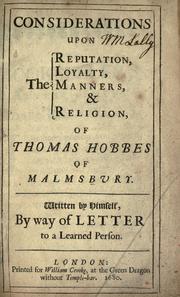
To the Right Honourable and others, the learned members of the Royal society, for the advancement of the sciences
1671



De Corpore Politico. Or The Elements Of Law, Moral & Politick. With Discourses upon severall Heads; as Of {The Law of Nature. Oathes and Covenants. Several kinds of Government. With the Changes and Revolutions of them
1652
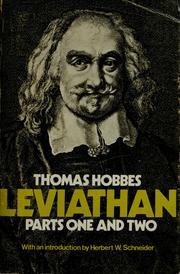

Philosophicall Rudiments Concerning Government and Society. Or, A Dissertation Concerning Man in his severall habitudes and respects, as the Member of a Society, first Secular, and then Sacred. Containing The Elements of Civill Politie in the Agreement which it hath both with Naturall and Divine Lawes. In which is demonstrated, Both what the Origine of Justice is, and wherein the Essence of Christian Religion doth consist. Together with The Nature, Limits, and Qualificati- ons both of Regiment and Subjection
1651
