Jean-Jacques Rousseau
28 June 1712 – 2 July 1778
Jean-Jacques Rousseau was a major Genevois philosopher, writer, and composer of 18th-century Romanticism. His political philosophy influenced the French Revolution and the development of modern political, sociological and educational thought.
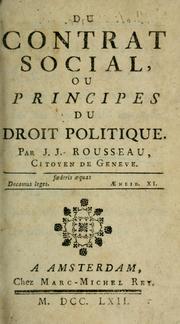
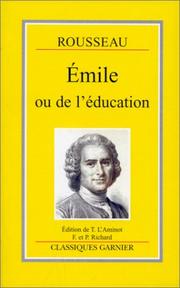
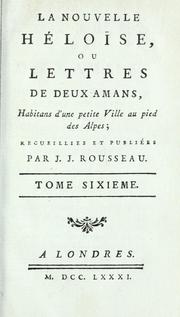
His novel, Emile: or, On Education, which he considered his most important work, is a seminal treatise on the education of the whole person for citizenship. His sentimental novel, Julie, ou la nouvelle Héloïse, was of great importance to the development of pre-Romanticism and romanticism in fiction. Rousseau's autobiographical writings: his Confessions, which initiated the modern autobiography, and his Reveries of a Solitary Walker were among the pre-eminent examples of the late 18th-century movement known as the "Age of Sensibility", featuring an increasing focus on subjectivity and introspection that has characterized the modern age.
Rousseau also made important contributions to music as a theorist. During the period of the French Revolution, Rousseau was the most popular of the philosophers among members of the Jacobin Club. He was interred as a national hero in the Panthéon in Paris, in 1794, 16 years after his death.1
Bibliografía (100 obras)










![Les confessions [2/2]](/_next/image?url=https%3A%2F%2Fcovers.openlibrary.org%2Fb%2Fid%2F4637701-M.jpg&w=3840&q=75)


![Les confessions [extraits]](/_next/image?url=https%3A%2F%2Fcovers.openlibrary.org%2Fb%2Fid%2F10565371-M.jpg&w=3840&q=75)


![Premiere[-seconde] partie des Confessions de J.J. Rousseau ..](/_next/image?url=https%3A%2F%2Fcovers.openlibrary.org%2Fb%2Fid%2F6582321-M.jpg&w=3840&q=75)






![Lettres écrites de la montagne. Premiere[-seconde] partie](/_next/image?url=https%3A%2F%2Fcovers.openlibrary.org%2Fb%2Fid%2F6483167-M.jpg&w=3840&q=75)